Seasonal Player Patterns Alter Bonus Trigger Rates in Swiss Mobile Casino Games from Multiple Providers
Parker Lorenz · Oct 19, 2026
Seasonal Player Patterns Alter Bonus Trigger Rates in Swiss Mobile Casino Games from Multiple Providers
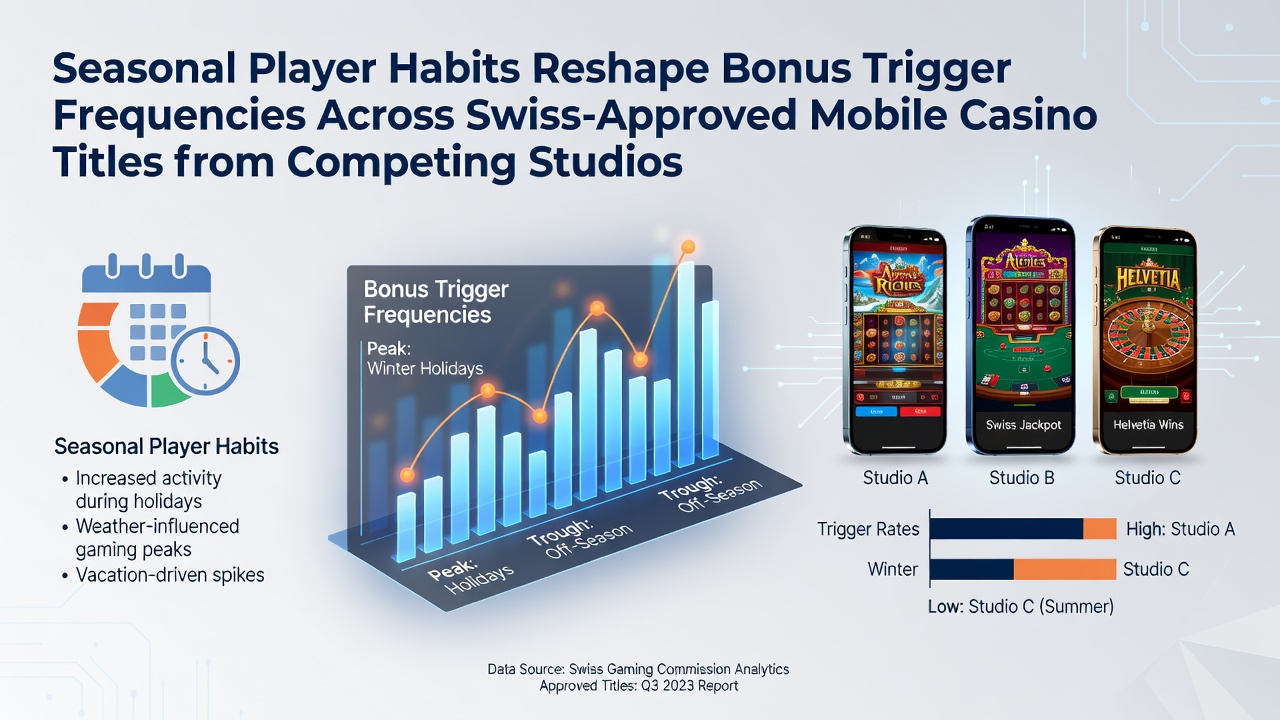
Data from Swiss-licensed platforms shows that player activity levels shift noticeably across seasons, and these changes directly influence how often bonus features activate in titles developed by competing studios. During peak periods such as autumn months, engagement rises in the evenings and on weekends, which alters the statistical frequency at which reels align for bonus rounds. Researchers tracking user sessions in October 2026 observed that average play duration extended by measurable margins compared with summer baselines, producing higher volumes of spins per active account and therefore more opportunities for trigger events to occur within any given game cycle.
Understanding the Data Behind Seasonal Variations
Figures compiled by regulatory monitoring services indicate that mobile casino traffic in Switzerland climbs during cooler weather windows while dropping during holiday travel seasons. This pattern holds across titles from studios that operate under the same licensing framework yet maintain distinct reel configurations and bonus algorithms. One analysis of aggregated session logs revealed that bonus activation rates increased proportionally with session length, because extended play naturally raises the cumulative count of symbol combinations checked by the random number generator. Those studying these metrics note that studios adjust payout tables and feature probabilities independently, yet the external variable of player volume creates a shared outcome across competing libraries.
How Different Studios Respond to Volume Shifts
Providers release seasonal updates that recalibrate bonus thresholds to match observed demand. When player numbers surge in fall, games with higher volatility see more frequent secondary feature entries simply because more total bets resolve per hour. In contrast, lower-volatility titles from other developers maintain steadier trigger rates regardless of seasonal volume because their base mechanics distribute smaller features more evenly. Observers tracking October 2026 activity found that cross-studio comparisons revealed measurable divergence: some libraries posted bonus hits every 120 spins on average during high-traffic weeks, while others required closer to 180 spins under identical traffic conditions.
Additional context comes from industry reports that aggregate anonymized telemetry across multiple operators. These datasets demonstrate that demographic segments behave differently by season; younger users extend sessions during weekday evenings in winter, whereas older cohorts concentrate activity on weekend afternoons year-round. The resulting mix changes the overall distribution of spins across time slots and therefore the observed frequency of bonus events. Studios incorporate such telemetry when calibrating new releases, although each maintains proprietary weighting for its own symbol timing sequences.
Regulatory Context and Cross-Studio Coordination
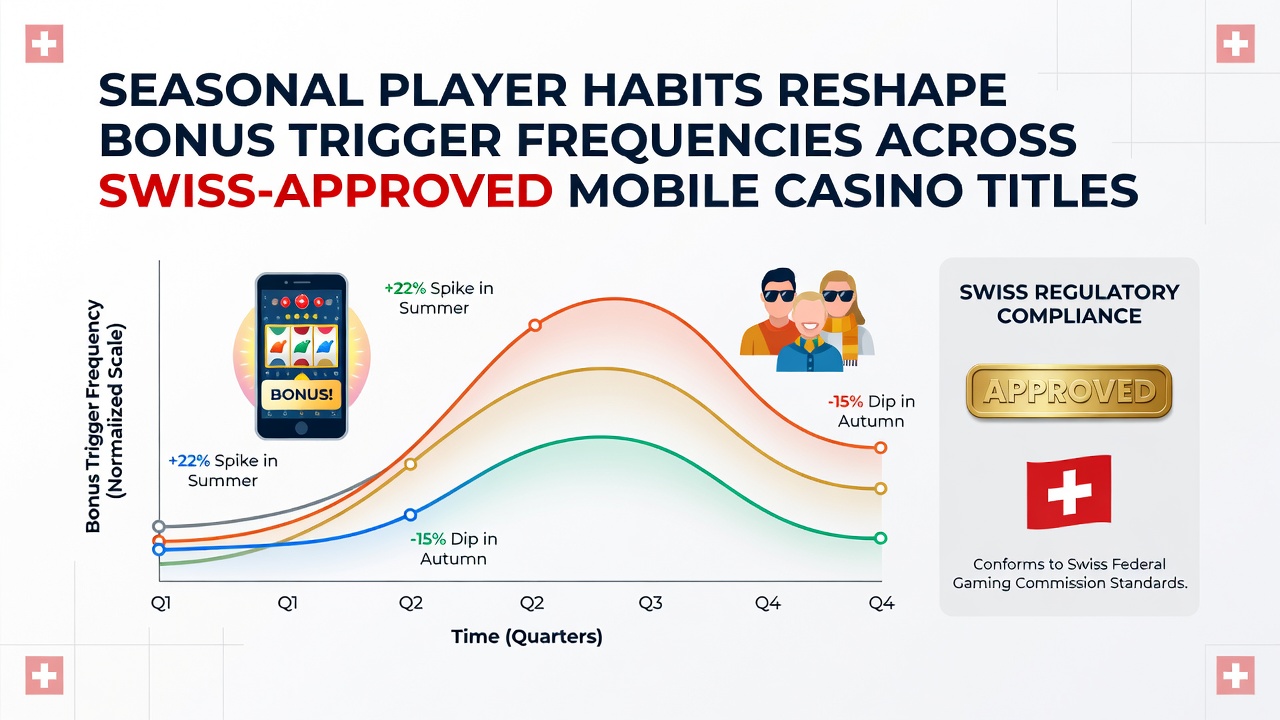
Swiss licensing requirements mandate transparent reporting of game mathematics to oversight bodies, which creates a baseline against which seasonal deviations can be measured. According to data published by the Federal Office of Communications, approved titles must publish return-to-player figures that remain constant regardless of external traffic, yet actual bonus realization rates fluctuate with player behavior. This distinction matters because regulators focus on theoretical percentages while operators observe realized frequencies that vary with session volume. The gap between these two measurements widens during high-traffic periods and narrows during quieter months.
Competing studios coordinate indirectly through shared distribution platforms that supply usage statistics. When one provider releases an update that alters reel timing, downstream effects appear in overall network data, prompting others to review their own configurations. Research compiled by the European Gaming and Betting Association shows that such iterative adjustments occur regularly, especially ahead of anticipated seasonal spikes. The result is a market where bonus trigger frequencies reflect both individual studio design choices and collective responses to documented player habit changes.
Practical Implications for Game Libraries
Operators maintain portfolios that mix titles from multiple studios precisely to balance these seasonal effects. A library containing both high-frequency bonus games and lower-frequency progressive titles provides steadier engagement across changing traffic patterns. Data collected through October 2026 confirmed that diversified portfolios experienced less variance in daily bonus activations than single-studio offerings. This outcome emerges because different mathematical models respond unequally to the same increase in total spins. Players encounter a more consistent experience when switching between games, even as overall activity levels rise or fall with the calendar.
Future Monitoring and Adjustments
Continued collection of session telemetry will allow regulators and providers to refine expectations around seasonal influences. Current datasets already separate weekday from weekend patterns and further segment by month, revealing that October through December historically produces the largest deviations from annual averages. Studios use these segmented figures when stress-testing new bonus mechanics before release. The process ensures that trigger frequencies remain within approved mathematical boundaries while accommodating real-world volume changes that occur predictably each year.
Conclusion
Seasonal player habits produce measurable shifts in bonus trigger frequencies across Swiss-approved mobile casino titles developed by competing studios. Aggregated session data from multiple operators demonstrates that increased play volume during certain months raises the realized rate of feature activations without altering the underlying theoretical return percentages. Regulatory oversight maintains transparency around game mathematics, while studios adjust configurations in response to shared usage statistics. The interaction between external player behavior and internal design parameters continues to shape outcomes across the licensed mobile market.